Science in 2026: the events to watch for in the coming year
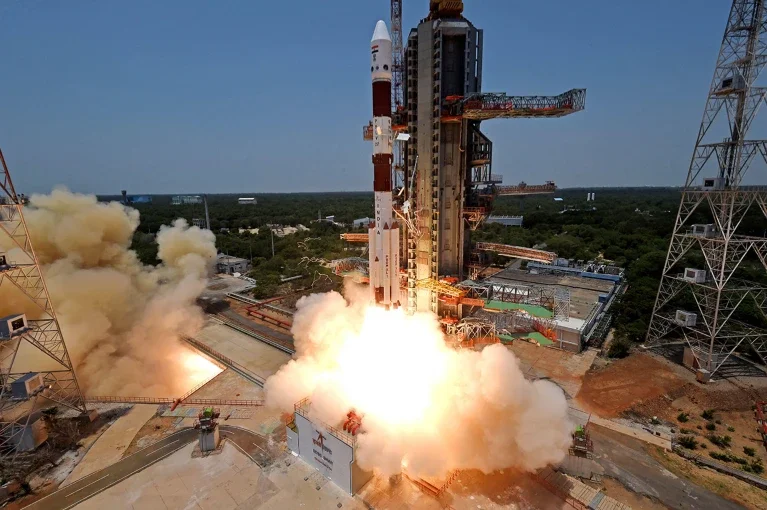
The international scientific journal Nature has published an overview of key events and trends that may significantly influence the development of science in 2026. Among the forecasts are a new stage in the use of artificial intelligence in scientific research, major space missions, large-scale projects focused on studying the Earth and the oceans, as well as changes in medicine and research infrastructure.
1. Artificial intelligence as a “scientist”
One of the central themes of Nature’s outlook is the evolving role of artificial intelligence (AI), which is expected to move beyond being merely a tool and increasingly become an active participant in the scientific process. AI systems are anticipated to not only analyse data, but also design experiments, interpret results, and generate scientific conclusions.
2. Major space missions
The year 2026 may become a turning point in space exploration. Key events include:
- NASA plans to conduct the Artemis II mission — the first crewed lunar flyby since the Apollo missions of the 1970s;
- China is set to launch the Chang’e-7 mission to explore the Moon’s south pole;
- Japan is preparing the MMX mission to the Martian moons Phobos and Deimos, with plans to return samples to Earth;
- The European Space Agency will launch the PLATO satellite to search for Earth-like exoplanets.
These projects will strengthen international presence in space and expand the boundaries of astrophysical and planetary research.
3. Ocean depths and other Earth expeditions
In the field of Earth sciences, particular interest is focused on deep-sea drilling of the ocean floor planned for 2026 by the Chinese research vessel Mengxiang. The goal is to retrieve samples from the Earth’s mantle at depths of up to 11 kilometres, which could provide new insights into the formation of the Earth’s crust and plate tectonics.
4. Breakthroughs in medicine and clinical trials
Results are expected from large-scale clinical trials of blood tests for the early detection of around 50 types of cancer, which could significantly change current approaches to cancer screening.
5. Infrastructure changes in science
Some major scientific facilities and instruments are also undergoing periods of modernisation and transformation. For example, the Large Hadron Collider (LHC) in Europe may be upgraded to operate in new experimental modes, potentially influencing research in particle physics.
Nature notes that 2026 will be a year in which science stands at the crossroads of technological acceleration and uncertainty. The main drivers of change include:
- a qualitative leap in AI technologies;
- the revival of major space programmes after interruptions;
- increased exploration of the depths of the oceans and the Earth;
- the potential impact of medical innovations on clinical practice;
- changes in the scientific landscape driven by infrastructure upgrades.
Share the news

