The first observations have been conducted on the partially restored GURT, which suffered extensive damage due to the full-scale invasion by the russian federation.
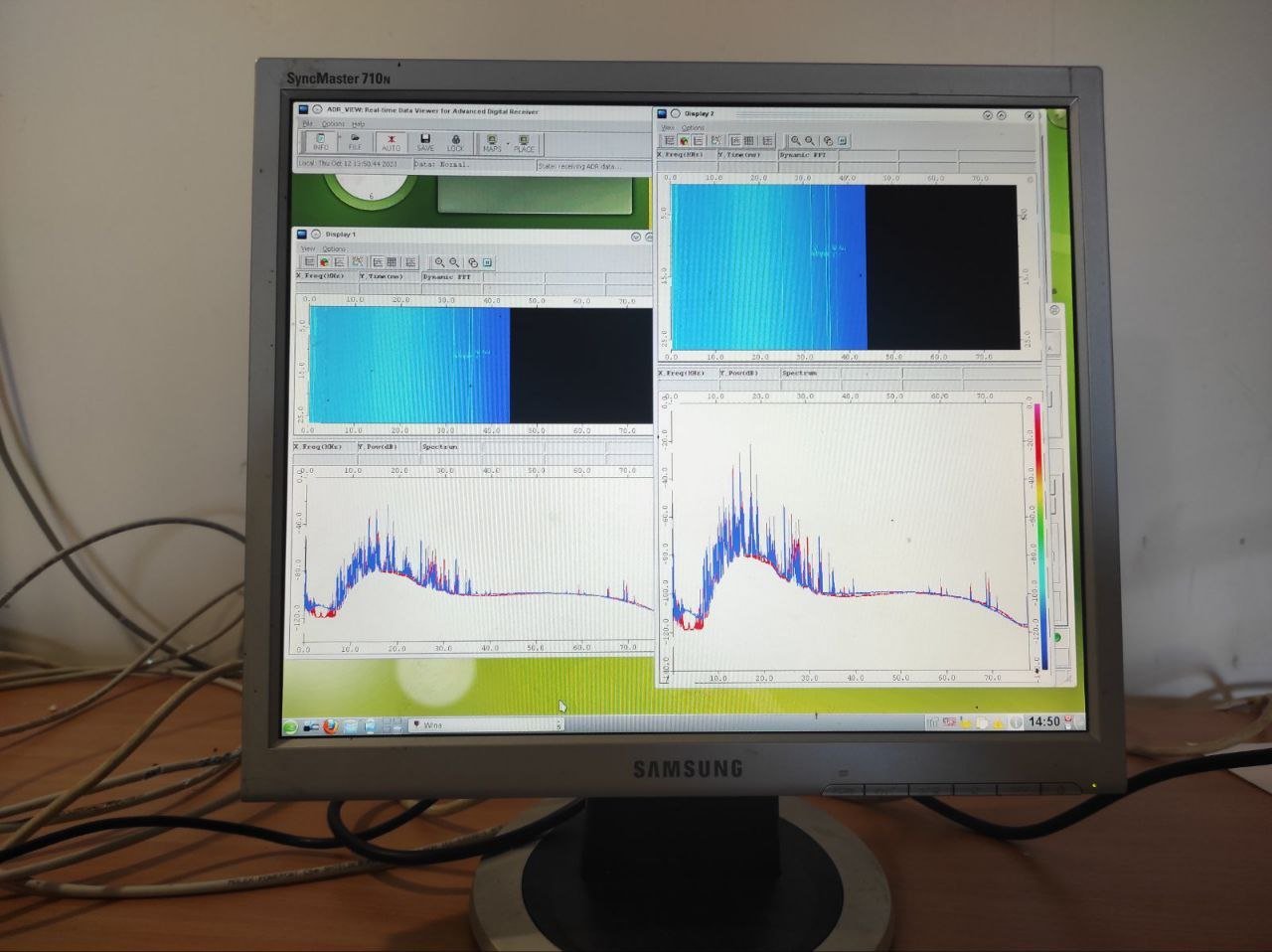
The first observations have been conducted on the partially restored GURT, which suffered extensive damage due to the full-scale invasion by the russian federation. Scientists are in the process of restoring the massive Ukrainian radio telescope, GURT, a significant portion of which was destroyed and looted during the full-scale invasion by russia in the Kharkiv region.
It was possible to salvage certain systems of this radio telescope, such as phasing, amplification, control, and registration. The salvaged elements and systems underwent the necessary diagnostics and repairs thanks to the dedicated efforts of the staff of the Radio Astronomy Institute of the National Academy of Sciences of Ukraine.
Recovery work began at the end of August with the installation of a solar power station since centralized electrical supply is not available in the region. By September 7th, electricity from the power station was supplied to the GURT infrastructure.
The antenna section system suffered the most damage due to the conflict, with over 50% of their technical equipment being damaged. The antenna system of the first section was restored on September 28, and on October 12, the first observations were made on the restored section of the radio telescope.
Currently, efforts are underway to restore the next section of GURT. The work is significantly complicated by the fact that a part of the area is still mined.
Background: GURT is a state-of-the-art radio astronomy instrument designed for studying the Universe in the frequency range of 8-80 MHz with advanced sensitivity and remarkable frequency-time resolution. It is located at the S. Ya. Braude Radio Astronomy Observatory in the Kharkiv region.
In early 2018, a remote control system was introduced on the GURT radio telescope, allowing for round-the-clock monitoring of various cosmic radiation in the meter and decameter radio wave ranges.
In addition to monitoring solar radiation, the radio telescope was used for observations of pulsar radio emissions, the study of Jupiter's bursts, investigations of background radio emissions in our Galaxy, long-term observations of radio emissions from supernova remnants in the Galaxy, and more.
Share the news

